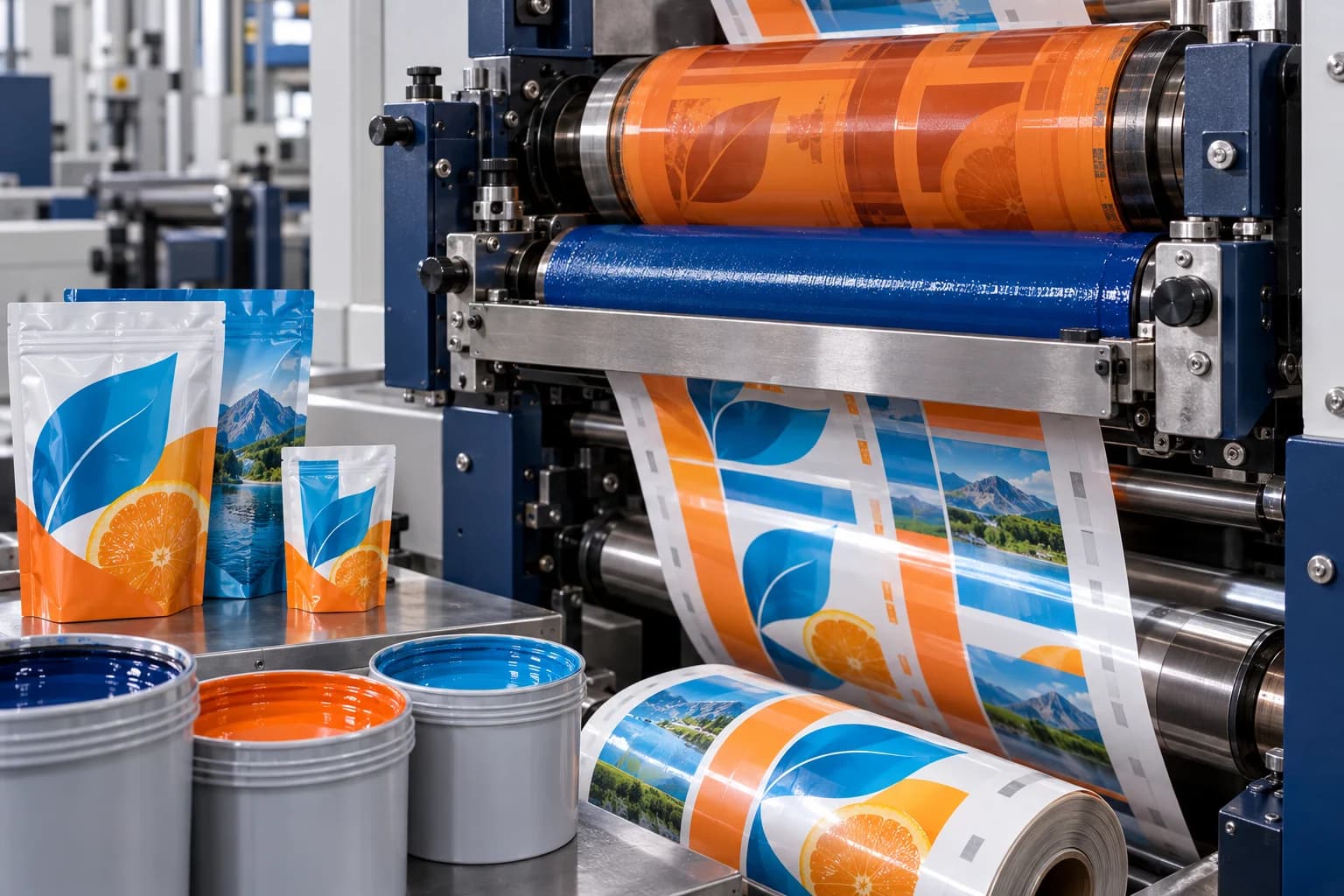
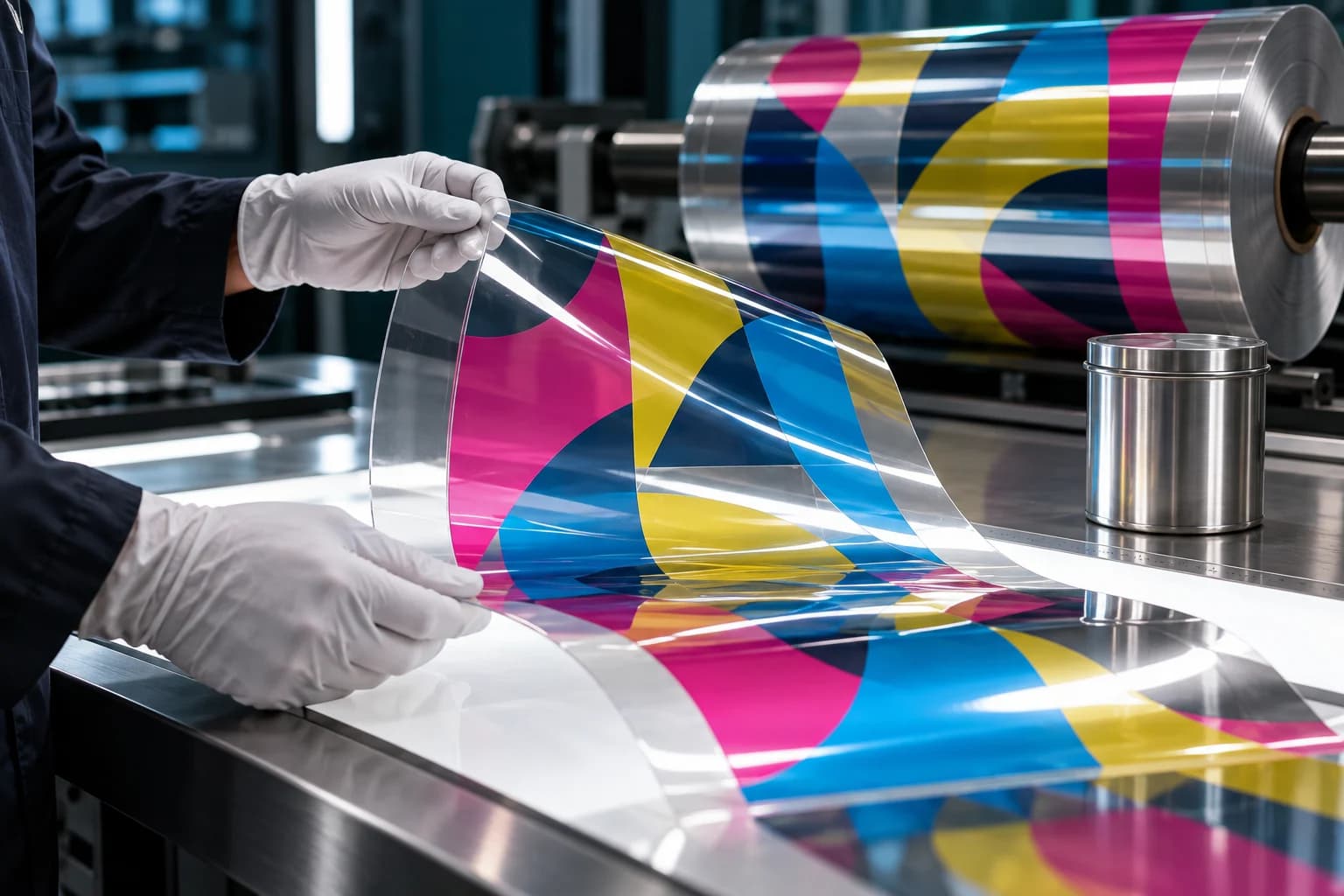
Film type and treatment
BOPP, PET, PE and metallized films need different ink chemistry, and surface treatment level changes adhesion.
OVERVIEW
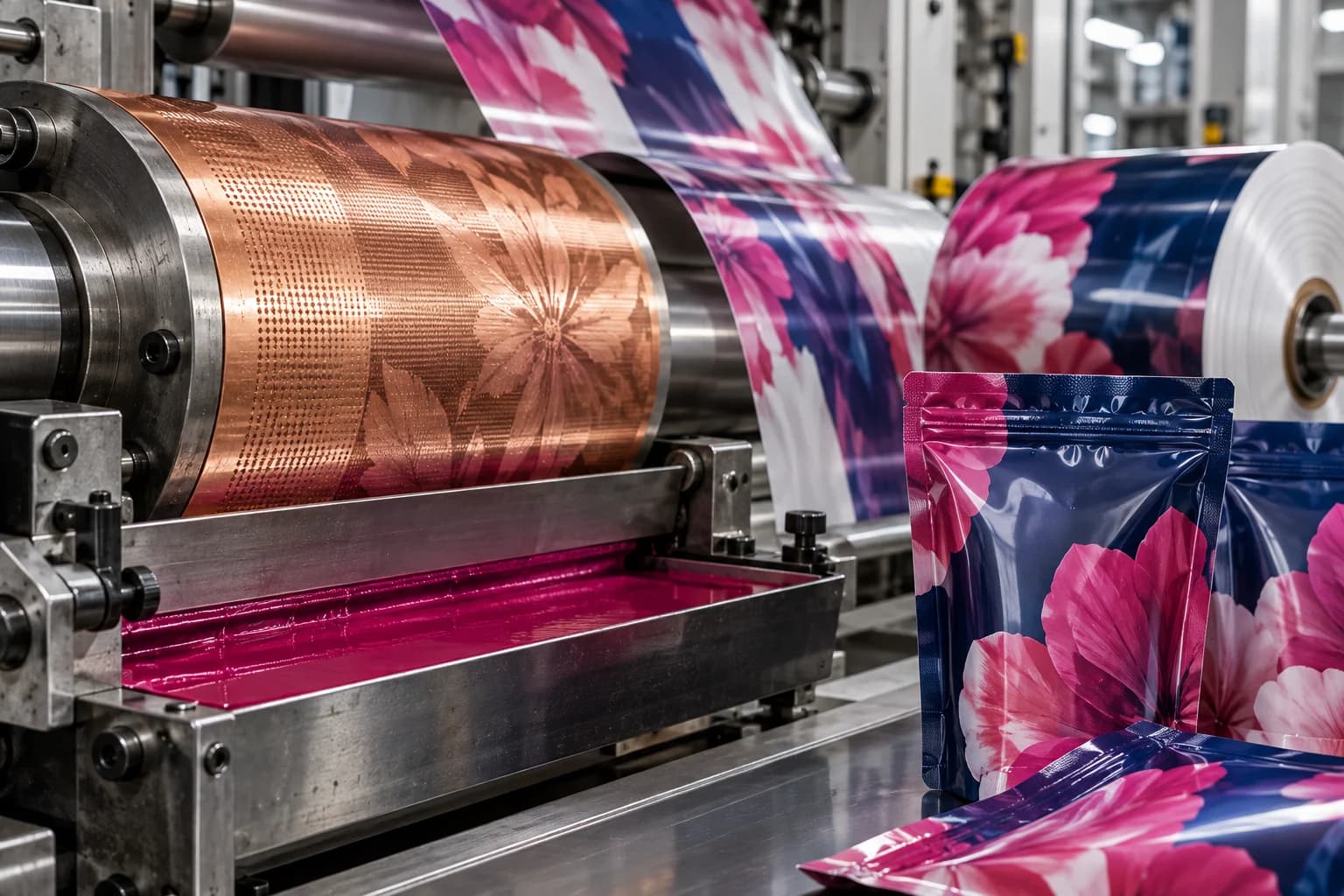
Printed film is the starting material for laminates, shrink sleeves, lidding and overwraps. Whether the image is printed on the surface or reverse-printed and buried in a laminate, the ink has to anchor to a non-absorbent film and keep its color and bond through every conversion step.
For printed films, the material specification is central: identify the film type, thickness, treatment and print side before discussing a replacement ink. BOPP, PET, PE and metallized materials are not interchangeable printing surfaces. Include the exact material reference and describe any change from the currently approved film. That context helps separate a color requirement from questions about anchorage and the behavior of a non-absorbent surface.
The printed web may next be slit, laminated, sealed or formed into a sleeve. Explain that route and identify any shrink or stretch expected during conversion and use. A print that appears satisfactory on a flat sample still needs consideration in its intended construction. For a film enquiry, define both the starting material and its next operation so the evaluation follows the web beyond the press.
A water-based option for film requires more than replacing the carrier in the current specification. Wetting, binder compatibility and sufficient water removal all affect film formation on a non-absorbent surface. Discuss whether a suitable product is available for the exact construction and evaluate the dried print before drawing conclusions about adhesion or handling resistance.
WHAT MATTERS
The material, printed layer and finishing sequence all influence the ink recommendation. Use these application considerations to prepare a brief for your packaging structure.
BOPP, PET, PE and metallized films need different ink chemistry, and surface treatment level changes adhesion.
Sleeves and stretch applications ask the ink to move with the film without cracking or losing color.
Slitting, laminating, sealing and sleeving all expose the print. Describe the full route from press to pack.
RECOMMENDED PRODUCTS
APPLICATION QUESTIONS
Practical answers to help you prepare the material, process and finished-pack details for this application.
Provide the film type, thickness, exact material reference and surface-treatment information where available. Identify the side being printed and whether the image remains exposed or enters a laminate. Include the press and downstream conversion route. A broad description such as plastic film does not distinguish the surfaces or conditions involved, and an ink used on one film should not automatically be assumed suitable for another.
Surface treatment is one of the material details that can affect ink adhesion to film. Include the treatment information supplied for the actual material and identify the print side in your enquiry. Discuss it alongside the film type and proposed ink rather than treating either detail in isolation. The printed result needs evaluation on the intended film; a generic material name does not establish the condition of its printing surface.
A sleeve print must be considered through the shrinking step, not only as a flat web. Describe the film and the shrink conditions, along with the intended appearance after forming around the container. Include any concerns about cracking or changes in color appearance in the acceptance criteria. Suitability for the particular sleeve construction needs confirmation; listing shrink sleeves as an application does not approve every ink for every shrink film.
Treat the change as a material review. Provide both film references, their treatment information, print side and conversion route, even when the artwork and press remain unchanged. Different films can require different ink chemistry and can affect the appearance of the result. Evaluate the proposed ink on the replacement material and relevant downstream operations before adopting the previous approval for the new film.
Identify the metallized film reference, the printed side and the intended printed appearance. Supply an approved sample on the relevant material where possible, together with the print and conversion details. The substrate forms part of the visual result, so a color reference on white paper is incomplete context. Agree the target on the actual construction and confirm the proposed ink for that material individually.
State whether the reel will be slit, laminated, sealed, used as an overwrap or converted into a sleeve. Include the relevant structure and end use rather than stopping at the press exit. Each route gives context for adhesion, appearance and handling requirements. Agree the evaluation around the operations the web will actually undergo, and review changes to those operations when reusing an existing print specification.
Tell us about your press, substrate and color target. We will help you frame the right ink conversation.