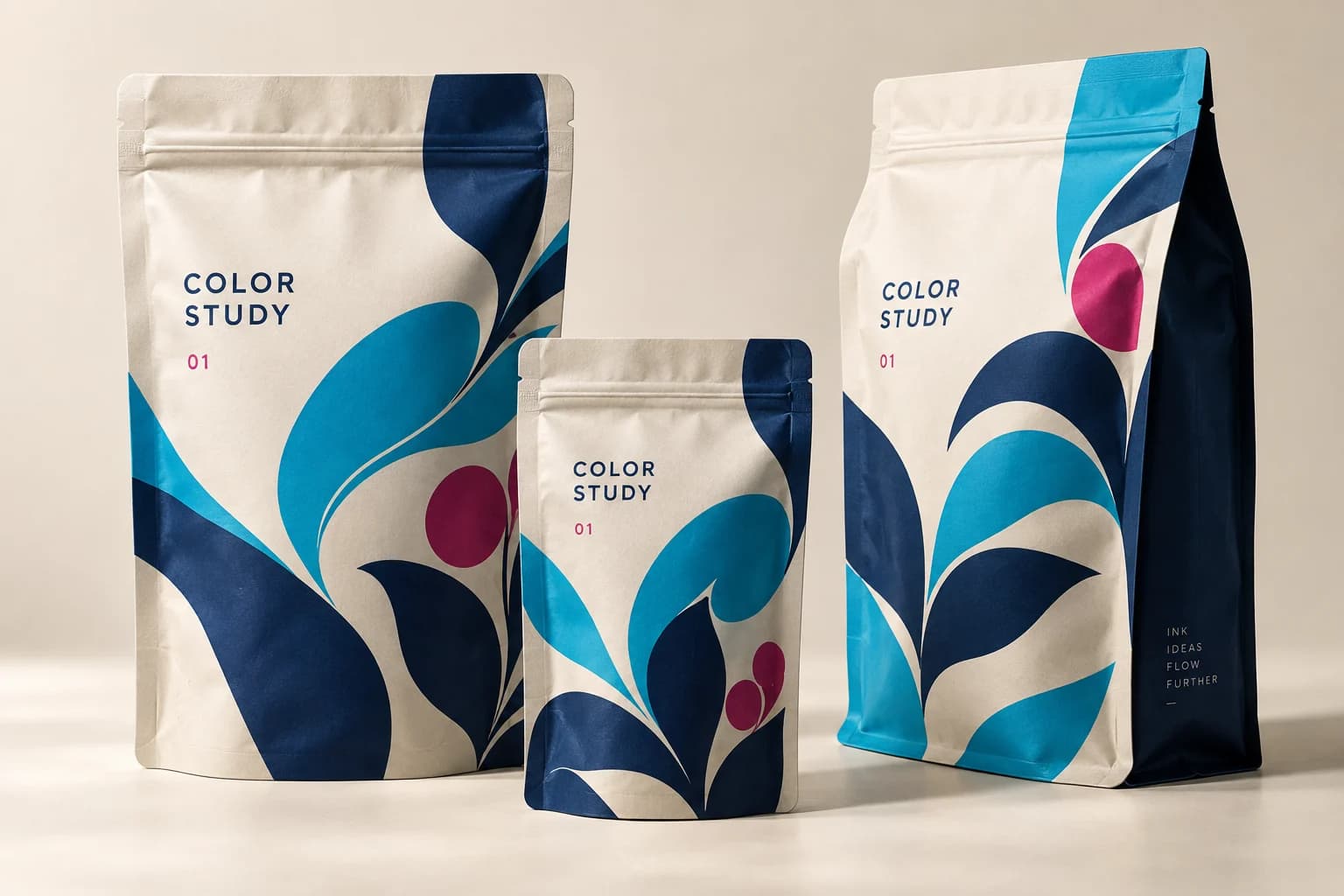
Describe the packaging structure
Identify the film, its treatment and whether the image is surface- or reverse-printed. For laminates, include the other layers and the adhesive.
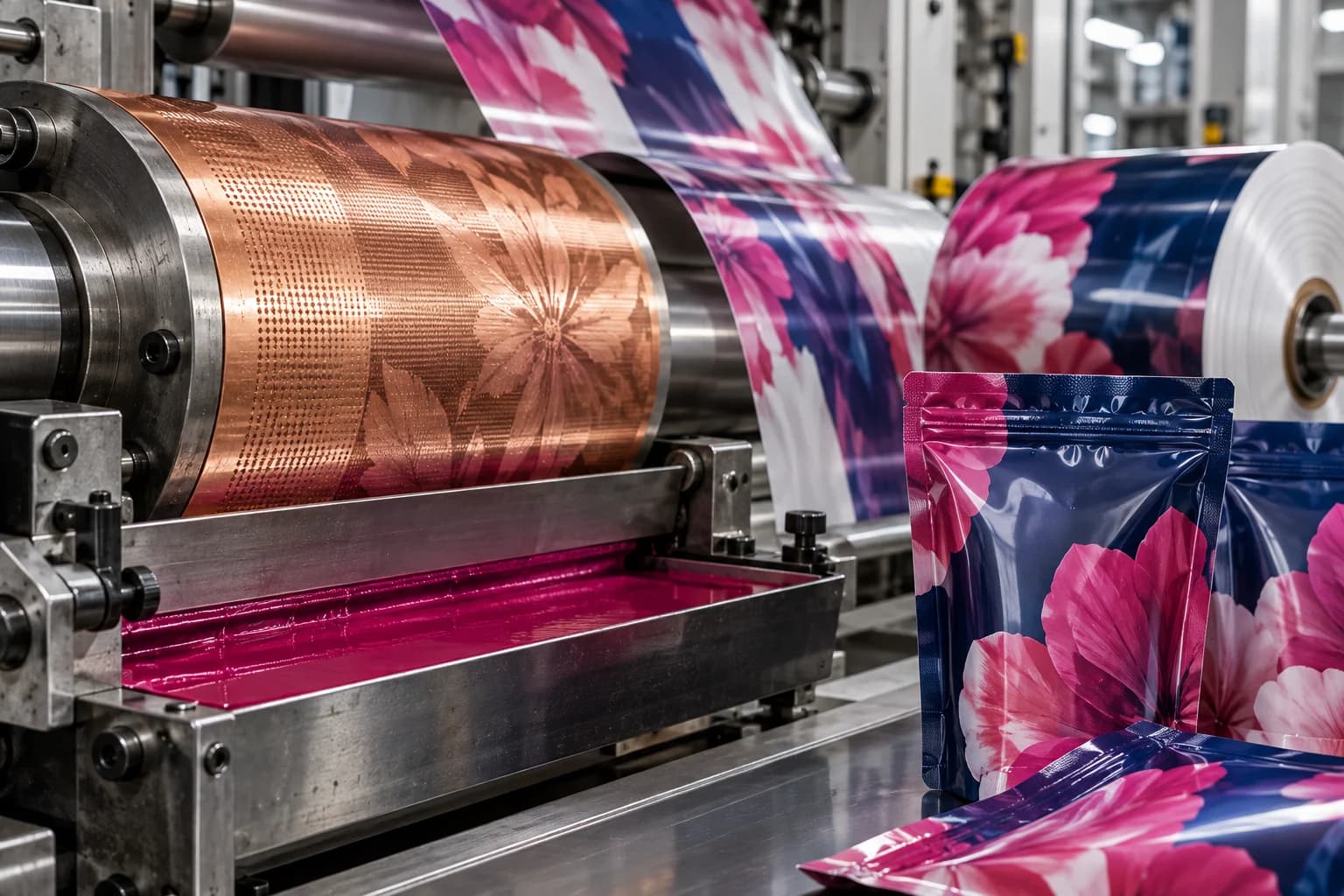
OVERVIEW
High-performance gravure inks for long, demanding packaging runs where fine tonal control, strong color and stable high-speed print behavior matter. Formulations are aligned with the cylinder, solvent balance, film structure and the downstream lamination or surface-print process.
Gravure printing uses an engraved cylinder to carry the image, and it rewards precision: fine tones, strong solids and stable behavior across very long runs. Ink selection has to consider both that process and what happens to the print afterwards, from lamination to sealing and filling.
Gravure ink selection connects the cylinder, material and drying conditions. Provide the film grade, print side and the press information available for the job. An existing sample and current ink reference can help explain the intended appearance and any issue being investigated.
For laminated work, include the complete structure and the operations after printing. Adhesive compatibility, sealing exposure and the contents of the pack belong in the discussion before selecting an ink. A production review should consider the printed film through the relevant conversion steps, not only its appearance at the press exit.
WHAT MATTERS
Review the application, material and production conditions together. These considerations help frame the questions to resolve before selecting a product and planning a press trial.
Identify the film, its treatment and whether the image is surface- or reverse-printed. For laminates, include the other layers and the adhesive.
Cylinder specification, operating speed, drying arrangement and current ink reference all frame the selection. Mention any recurring print issues.
Explain how the material will be converted, filled and handled. Resistance requirements should be checked against the product's technical documentation.
QUESTIONS
Do not assume so. Some products are designed for more than one process, but suitability must be confirmed for the particular product, press and application. Provide the existing product reference and describe the proposed change. Ask for the relevant product guidance before treating a previous result as approval for a different setup.
In a laminate, the printed layer becomes part of a larger structure. Include the film, adhesive and intended use so the ink is considered in that context. Agree which checks will be reviewed after conversion as well as on the printed reel; an approved shade alone does not establish compatibility with the complete pack.
Provide the product reference, shade, previous batch details if available, quantity and delivery destination. Include any change to the substrate or process. Retain an approved physical print and confirm whether the intended finish, handling exposure and customer acceptance conditions are still the same.
Include the press, normal running speed, available drying setup and relevant cylinder information where known. Add the exact substrate, current ink reference and color target. These inputs help connect the recommendation to the actual production conditions instead of treating all gravure applications as the same job.
Identify the film structure, print side, adhesive and the downstream conditions the pack will face. Agree the relevant checks with the teams responsible for printing and conversion. The review should follow the proposed structure through its normal finishing sequence, with product documentation available for the specific ink being considered.
A different film grade, coating or treatment can affect ink adhesion and appearance, even when the packaging format stays the same. Include the old and proposed specifications and explain any conversion changes. Confirm the product recommendation and evaluation plan for the new material before assuming that an earlier approval still applies.
Describe the ink, substrate and packaging structure, together with press speed, drying conditions and how the printed reel was handled or stored. State when the odor was first noticed and whether it changes after conversion. A category-level answer cannot establish the cause; the review needs the actual product and production context.
PACKAGING APPLICATIONS
Tell us about your press, substrate and color target. We will help you frame the right ink conversation.