Match the lamp
Tell us whether you run mercury UV or LED, the lamp wavelength and power, and your press speed. Cure response depends on all of them.
OVERVIEW
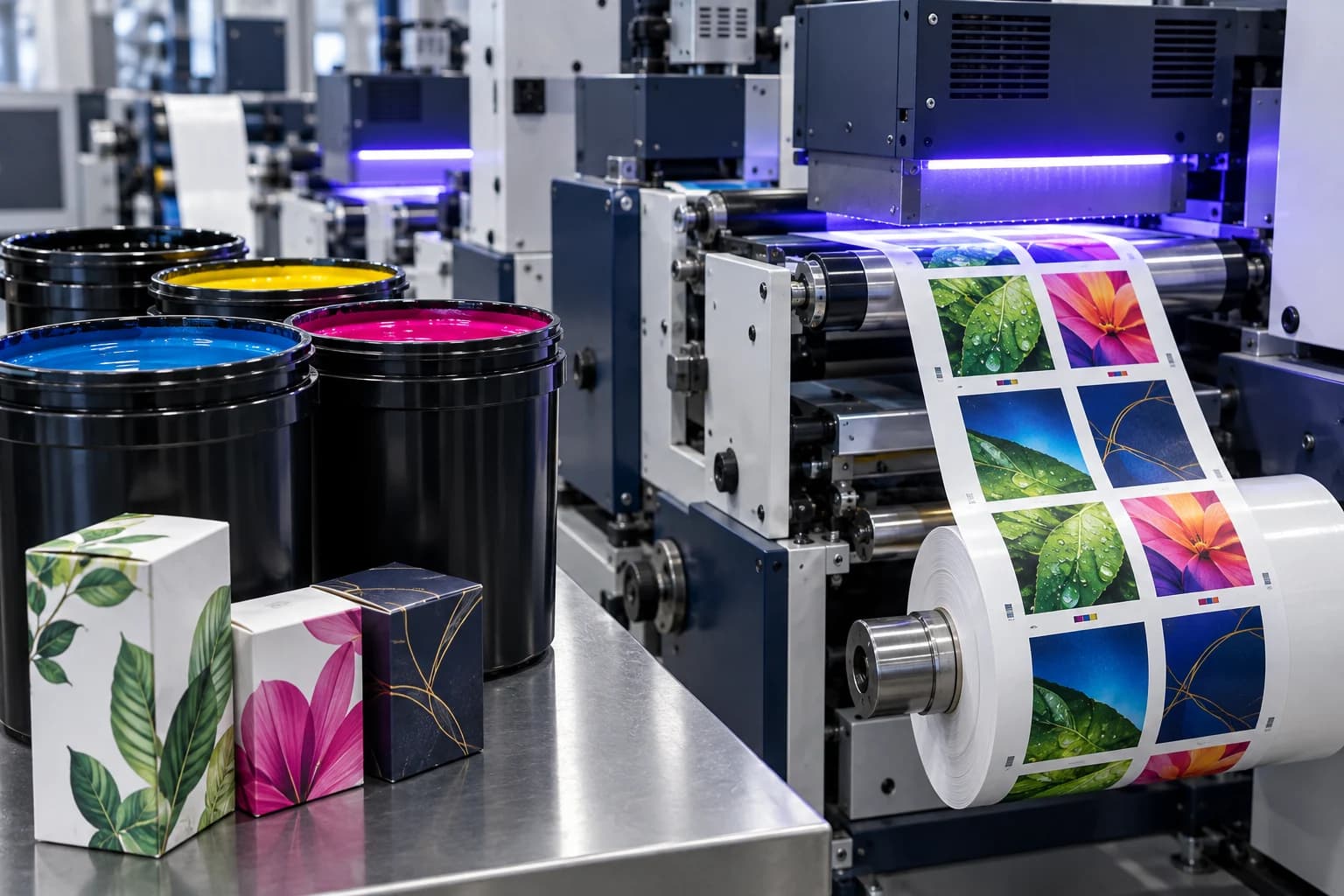
UV and LED-curable ink options for packaging work that needs immediate cure, crisp graphics and durable surfaces. Formulation depends on the lamp system, substrate and finished-pack requirements, especially adhesion, flexibility, chemical resistance and migration considerations.
UV and LED-curable inks cure under the lamp instead of drying by evaporation, so printed work can move straight to finishing. That speed comes with specific requirements: the ink must suit the lamp output, cure fully on the chosen substrate and meet the adhesion, flexibility and end-use expectations of the finished pack.
The curing equipment belongs in the initial brief. Conventional UV and LED systems have different output characteristics, and the ink must be considered alongside lamp specification, press speed and substrate. Include the actual equipment details rather than treating all UV-curable products as interchangeable.
The evaluation should continue after the print leaves the lamp. Film labels may need to flex around a container; cartons may be creased, coated or glued. Explain those operations and the exposure the finished packaging will meet so the proposed product can be reviewed against the complete application.
WHAT MATTERS
Review the application, material and production conditions together. These considerations help frame the questions to resolve before selecting a product and planning a press trial.
Tell us whether you run mercury UV or LED, the lamp wavelength and power, and your press speed. Cure response depends on all of them.
Share the substrate, any primer or corona treatment, and whether the print must flex, squeeze or be die-cut after curing.
For food, personal-care or pharmaceutical packaging, raise migration and documentation requirements at the start of the enquiry.
QUESTIONS
Follow your curing equipment. An ink formulated for one lamp type may not cure fully under another, so include the lamp specification in your enquiry. Also identify the substrate, normal press speed and finishing sequence so the proposed product can be evaluated under the conditions in which it will run.
It depends on the formulation, the packaging structure and the applicable regulations. Food-related UV applications need product-specific documentation, so raise this before an ink is selected. Specify the printed layer, contents and destination market, and ask which supporting statements are available for the proposed formulation.
Many label films can be printed with UV inks, but adhesion depends on the film and its surface treatment. Send a sample or specification so compatibility can be discussed. Include any primer, the container shape and whether the label must squeeze or flex, so approval reflects the finished application.
Surface feel alone is not a complete assessment of cure or finished-pack suitability. Review the proposed ink against the lamp specification and the production conditions, then agree the checks relevant to the application. Ask for the product guidance and raise any sensitive end-use requirements before approving a trial.
State whether the equipment is conventional UV or LED, together with the wavelength and output information available from your equipment specification. Include press speed, substrate and any primer or surface treatment. These details help frame compatibility questions without assuming that one UV product will work under every lamp.
Yes. Folding, die-cutting, squeezing and application around a curved container can place different demands on the printed layer. Describe the complete finishing sequence and the expected handling. The proposed ink should be evaluated on the intended material and pack format, rather than approved only as a flat printed sample.
Treat it as a production change involving both equipment and ink. Share the existing product reference, proposed LED specification and intended substrates, then discuss the evaluation plan and required documents. Confirm compatibility for the proposed system before placing a production order or carrying forward an existing approval.
PACKAGING APPLICATIONS
Tell us about your press, substrate and color target. We will help you frame the right ink conversation.