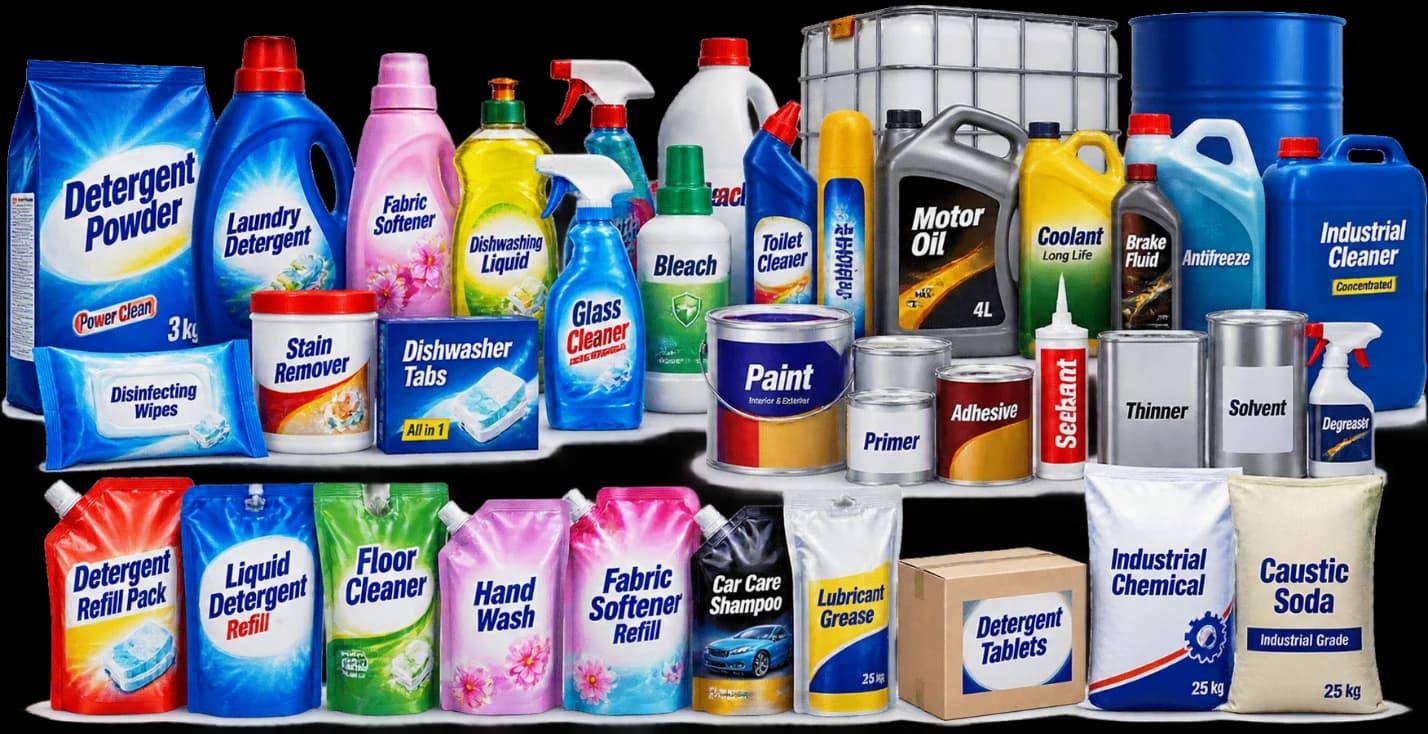
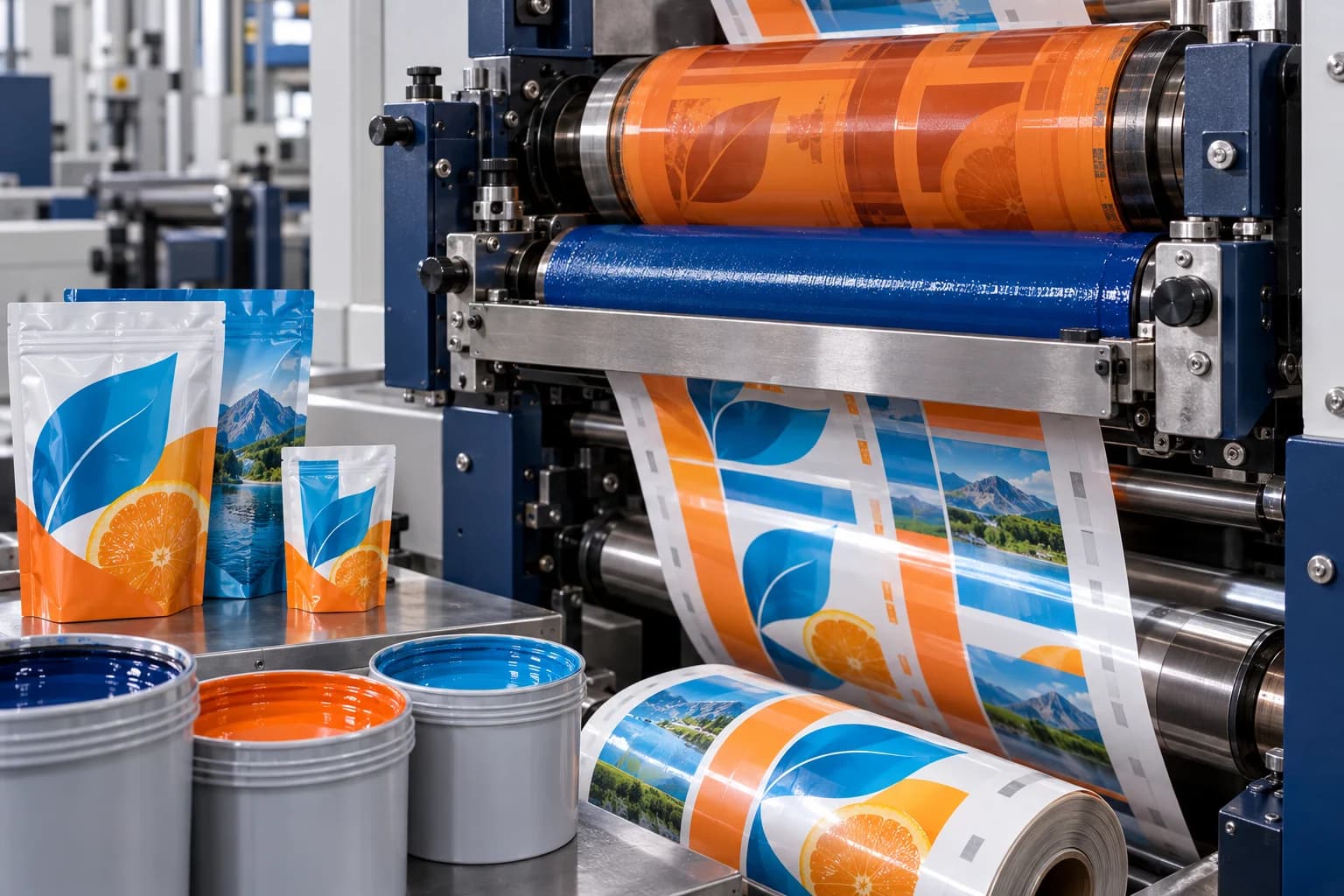
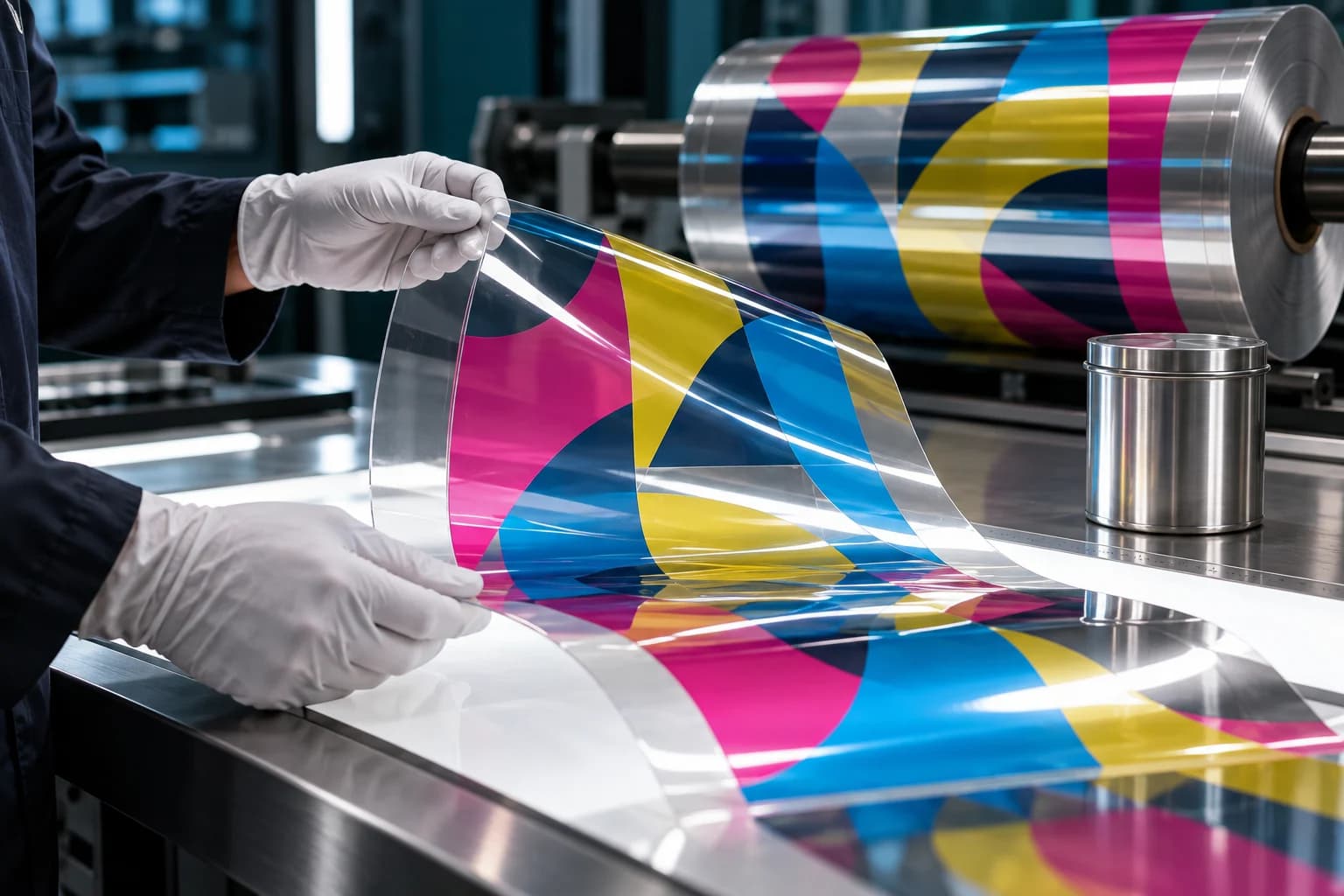
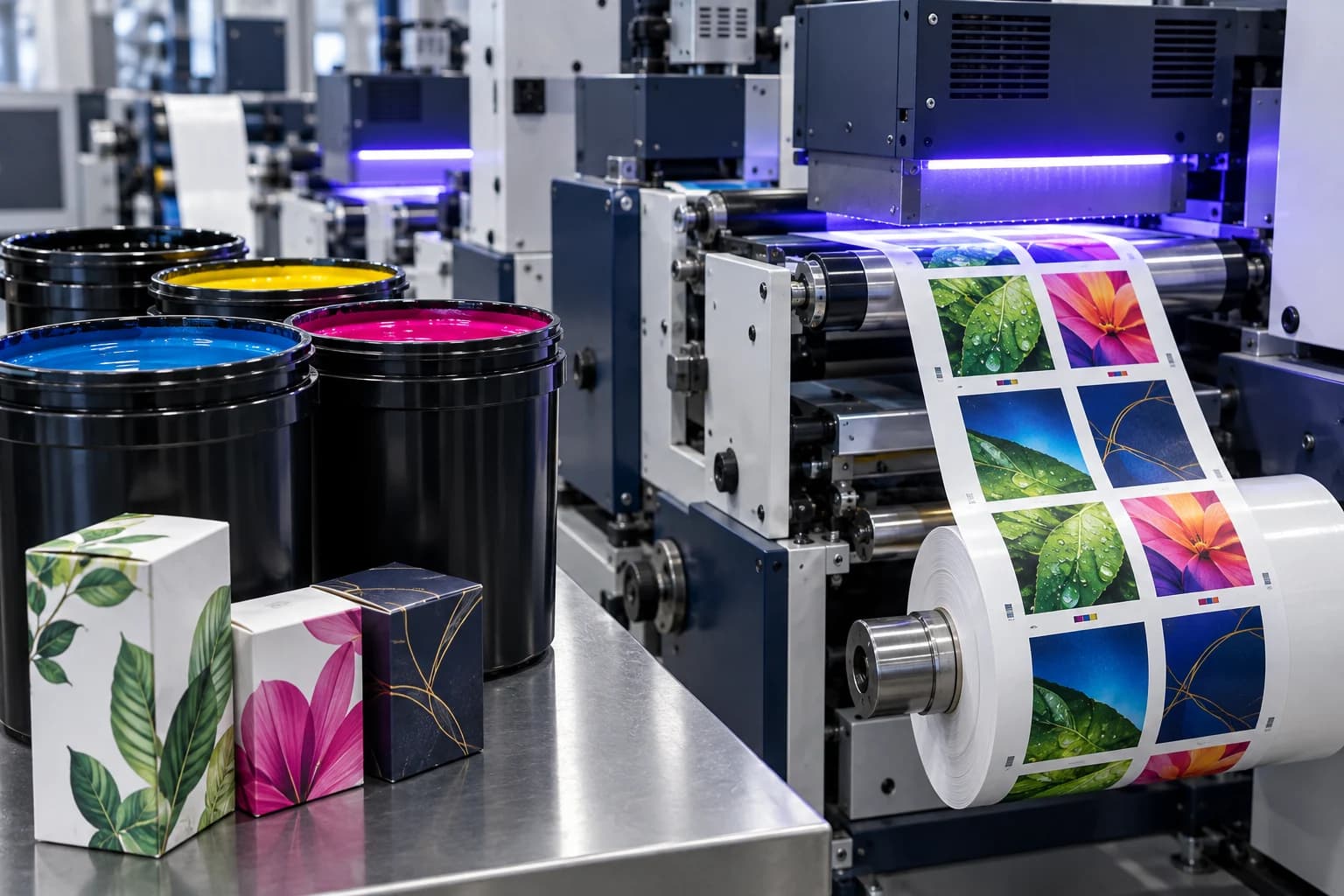
Household and industrial chemical packaging requires advanced printing ink technologies capable of delivering excellent adhesion, chemical resistance, mechanical durability, and consistent color reproduction under demanding application conditions. Packaging used for detergents, disinfectants, cleaning agents, lubricants, paints, coatings, adhesives, solvents, and specialty chemicals must maintain print integrity throughout filling, handling, storage, transportation, and end-use applications.
At Jazeera Inks, we understand the technical challenges associated with printing on flexible films, rigid plastic containers, labels, paperboard cartons, multilayer laminates, and industrial packaging substrates. Our application-focused approach emphasizes the selection of suitable ink binder systems, pigment dispersions, additives, and solvent or water-based formulations to achieve optimum printing performance.
Printing ink performance depends on several critical parameters, including substrate surface energy, ink viscosity, drying characteristics, adhesion strength, rub resistance, scratch resistance, and resistance to chemical exposure. Particular attention is given to packaging applications involving alkaline detergents, acidic cleaning solutions, alcohol-based disinfectants, oils, hydrocarbons, and other aggressive chemical formulations.
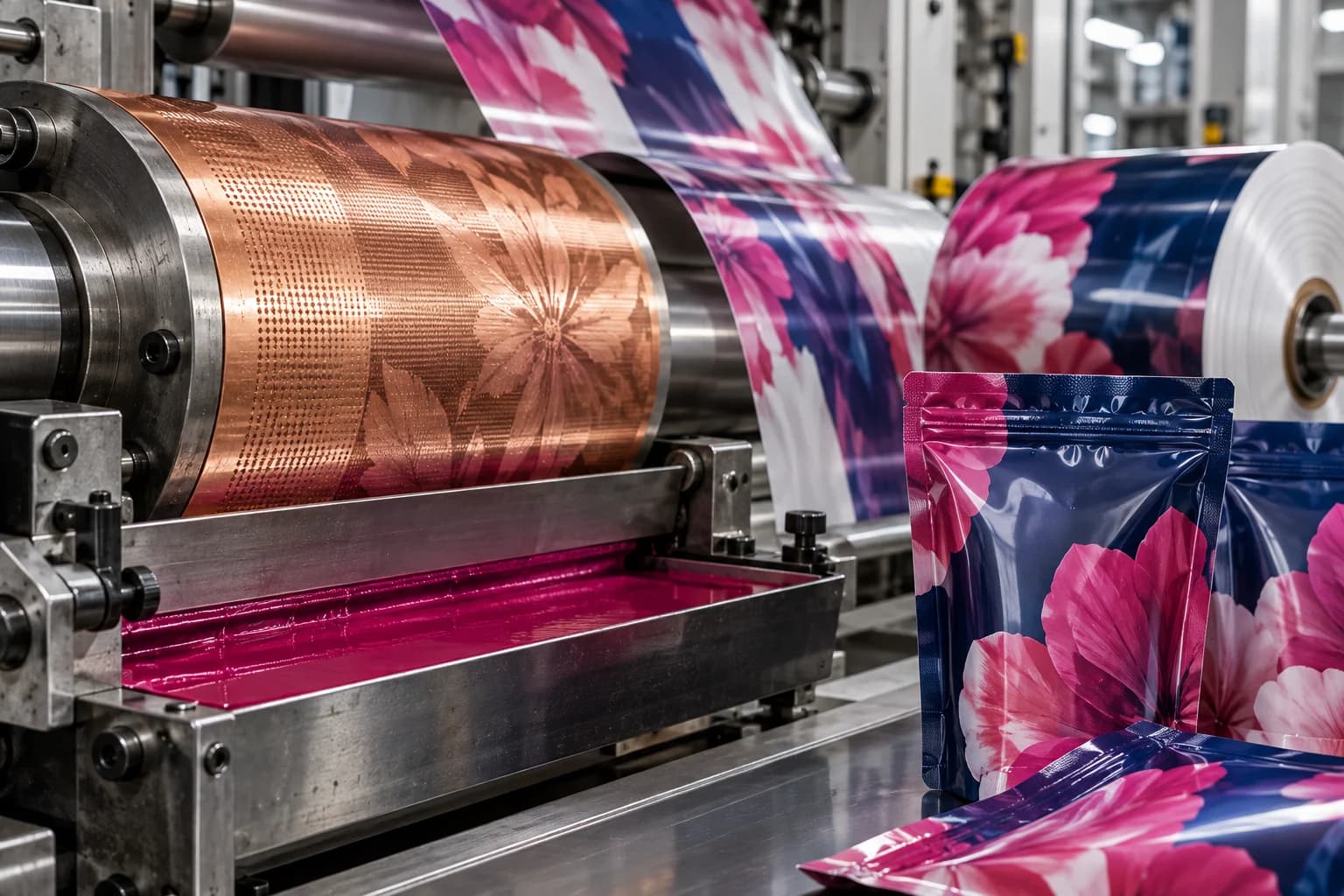
Our technical approach considers the compatibility of printing inks with flexographic, gravure, and other applicable printing technologies, supporting excellent print definition, controlled ink transfer, uniform film formation, and consistent color strength. Appropriate ink selection also helps minimize printing defects, improve production efficiency, and maintain packaging appearance throughout the product lifecycle.
Read moreRead less about Household & Home Care
For demanding chemical packaging applications, resistance to abrasion, moisture, temperature variations, chemical splashes, and handling stresses is essential. Ink formulations must be evaluated according to the packaging substrate, expected chemical exposure, printing conditions, and subsequent converting operations to ensure reliable end-use performance.
At Jazeera Inks, sustainability is an important consideration in printing ink technology. We recognize the growing importance of water-based ink systems, optimized solvent consumption, efficient drying processes, reduced ink waste, and compatibility with recyclable packaging structures where technically feasible.
By combining application knowledge, color formulation expertise, substrate compatibility assessment, and technical guidance, Jazeera Inks aims to support packaging manufacturers in achieving reliable print quality, operational efficiency, chemical resistance, and sustainable packaging development across household and industrial chemical markets.
PRIORITIES
What matters most
Substrate adhesion & print compatibility
Chemical packaging utilizes a wide variety of substrates, each presenting different surface energy, chemical compatibility, and processing requirements. Printing ink systems must be selected according to substrate characteristics and printing conditions to achieve suitable adhesion and print stability.
Chemical & product resistance
Household and industrial chemical packaging may be exposed to aggressive formulations, including alkaline detergents, surfactants, oils, solvents, disinfectants, and cleaning chemicals. Depending on the packaging application, printing inks may require resistance to:
Abrasion, scratch & rub resistance
Printed chemical packaging frequently experiences mechanical stress during high-speed filling, stacking, transportation, warehousing, and retail handling. Appropriate ink formulations help maintain print integrity by providing suitable resistance to dry rubbing, wet rubbing, scratching, scuffing, and surface abrasion. These properties are particularly important for industrial chemical containers, detergent pouches, lubricant packaging, and products handled repeatedly throughout distribution.
Color strength, print quality & consistency
Strong visual identification and accurate product information are essential for household and industrial chemical packaging.
Name the actual packaged formulation and describe its concentration, exposure duration and use conditions. Resistance to one detergent, disinfectant, oil or solvent does not establish resistance to every chemical product.
Which substrates are considered?
Packaging substrates include PE, PP, BOPP, PET, multilayer laminates, coated and uncoated paperboard, metal packaging and self-adhesive labels. Surface treatment, binder chemistry and drying influence adhesion.
Why evaluate both wet and dry rubbing?
Chemical packs can experience moisture, splashes and repeated handling as well as dry friction in storage and transport. Both conditions help define the required print durability.
Can water-based inks be considered?
Consider water-based systems where technically appropriate for the substrate, drying conditions and exposure requirements. The carrier alone does not establish finished-print resistance or whole-pack recyclability.
Talk to us about household & home care packaging
Tell us about your press, substrate and color target. We will help you frame the right ink conversation.