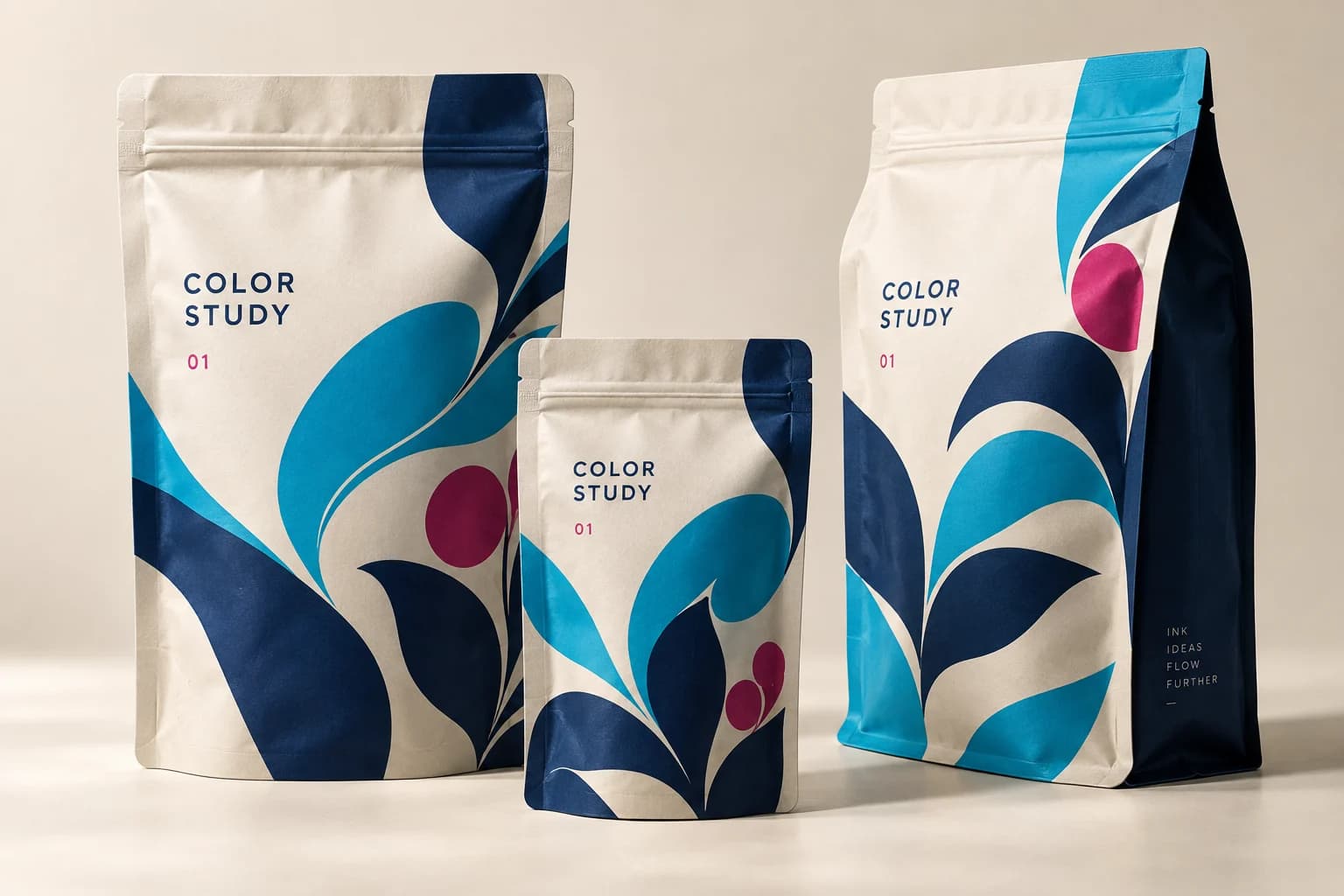
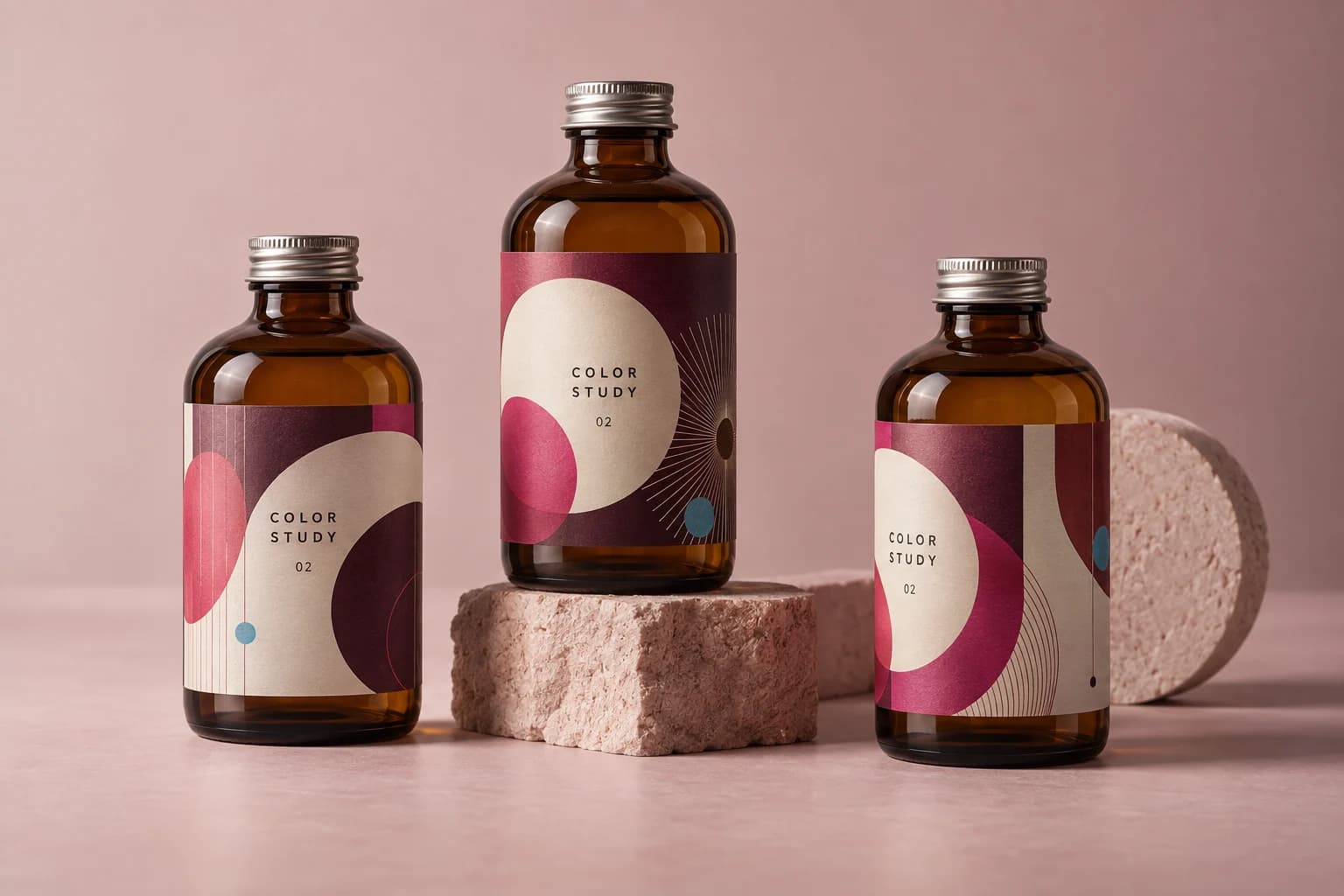
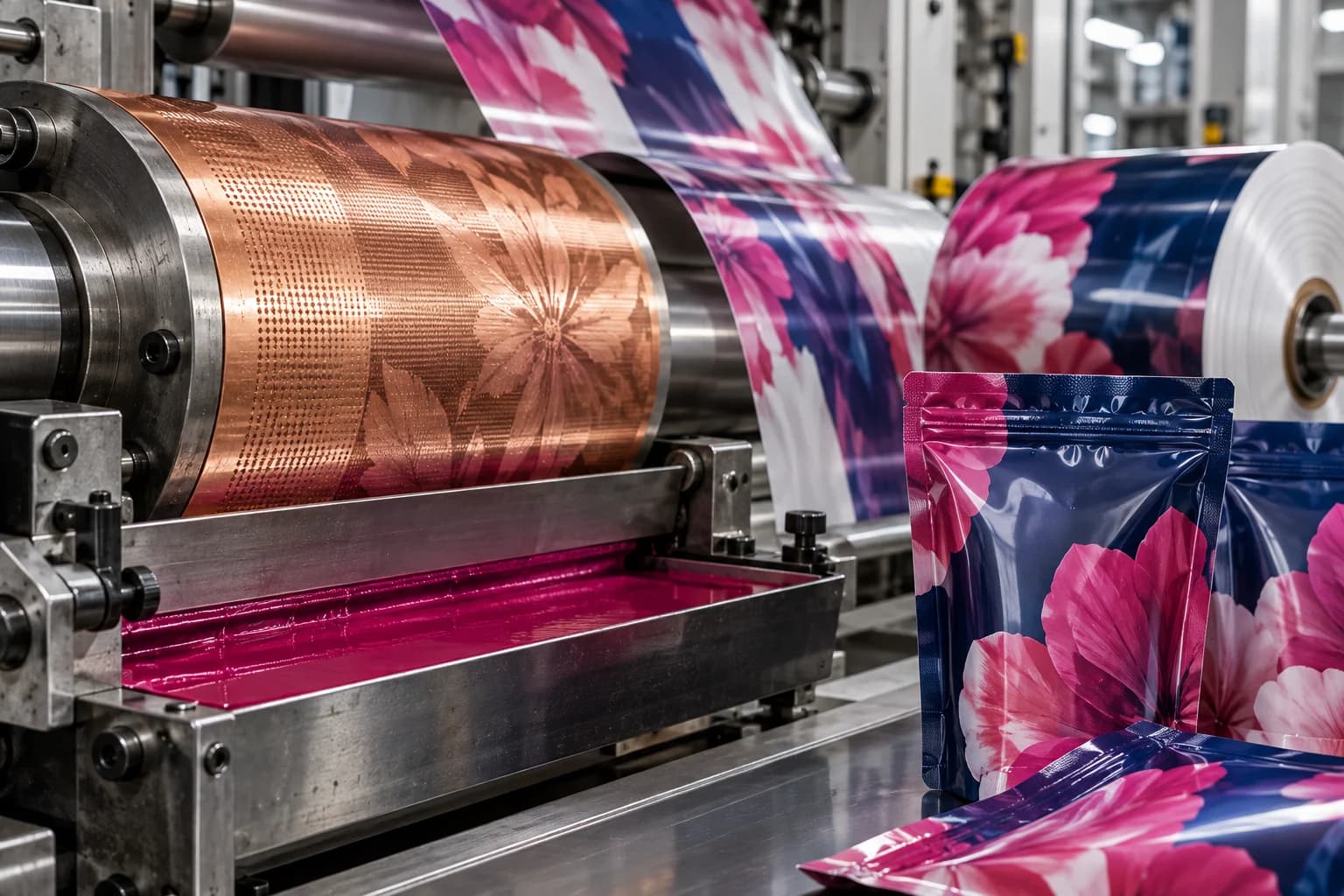
The surface sets the starting point
Paper, board and film present different printing conditions. Share the exact material, any surface treatment and whether the ink stays exposed or becomes part of a laminate.
OVERVIEW
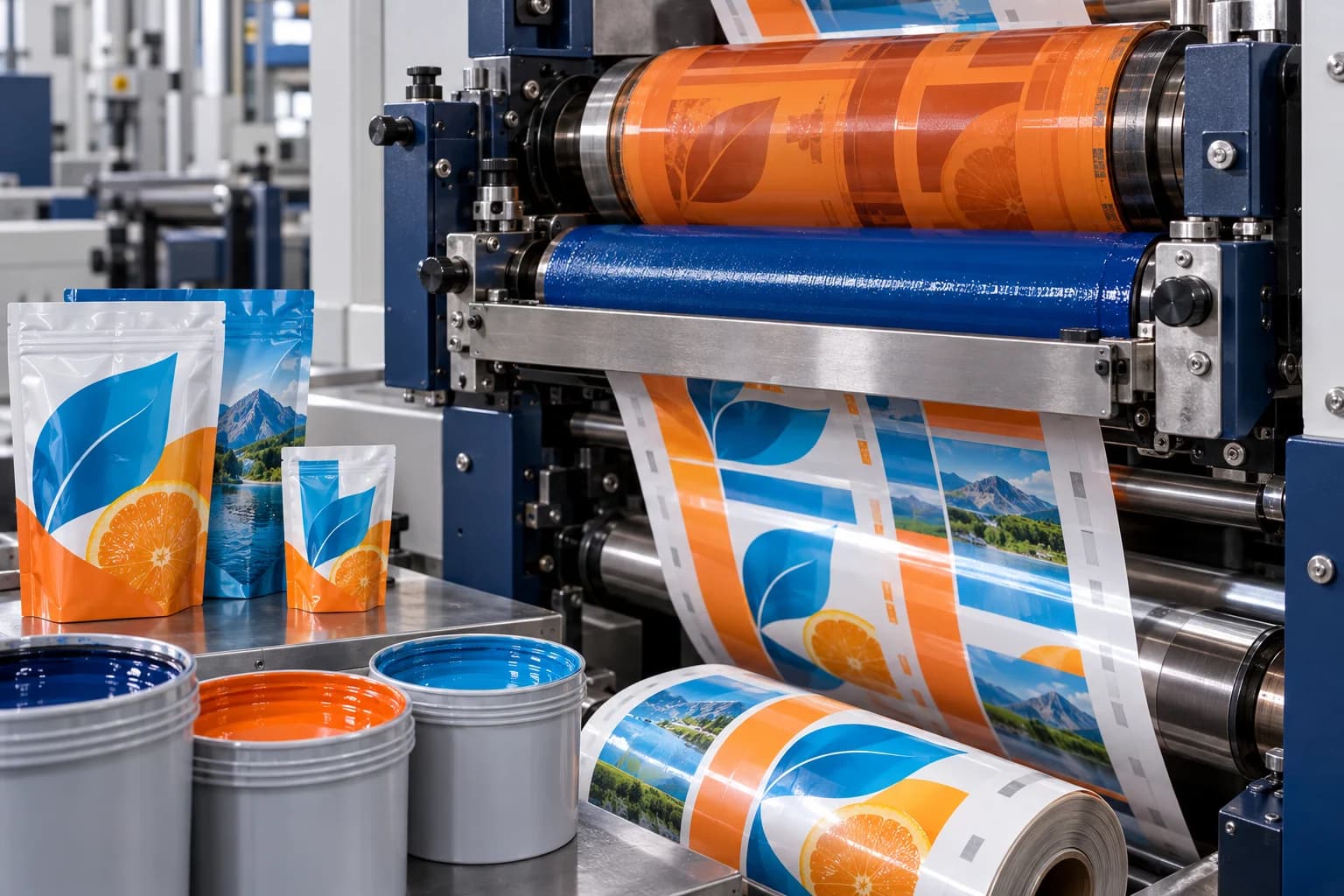
Packaging inks engineered for clean transfer through the anilox, stable press behavior and consistent reproduction at production speed. Systems can be matched to surface or reverse printing, the chosen film or paper, drying capacity and the resistance required through conversion and filling.
Flexographic printing brings color to everyday packaging, from a label on a bottle to a printed pouch or paper bag. Choosing an ink starts with that finished item and the press that produces it. Solvent-based and water-based systems are both used in flexography; the right one follows from your substrate, drying capacity and end-use requirements.
Flexographic work can involve porous paper, coated board or non-absorbent films, each with different requirements. The press setup also matters: anilox specification, print conditions and drying capacity belong alongside the material details. A useful brief identifies the exact substrate and the image quality or performance target.
The print side and the finished structure help distinguish one job from another. A surface-printed bag may need different handling resistance from an image inside a laminate. Include coating, lamination, sealing and filling steps so the recommendation addresses the route from the press to the finished pack.
WHAT MATTERS
Review the application, material and production conditions together. These considerations help frame the questions to resolve before selecting a product and planning a press trial.
Paper, board and film present different printing conditions. Share the exact material, any surface treatment and whether the ink stays exposed or becomes part of a laminate.
Include your press model, current ink system, anilox details and drying setup. They make an enquiry far more useful than choosing an ink by color alone.
Tell us about the artwork, target shade, desired finish and handling requirements. A printed reference is especially useful for repeat jobs.
QUESTIONS
No. Flexography is a printing process; water-based and solvent-based describe ink systems. The appropriate system depends on the substrate, press configuration and application. State the process and system separately in your brief, together with the exact material and available drying or curing equipment.
Send the substrate specification, press details, color reference, current ink information and expected quantity. Mention any finishing operations after printing. For a conversion problem, describe when it appears and list recent changes to the material, setup or ink so the technical discussion has a clear starting point.
Share the current product reference and job requirements to discuss availability. Evaluate any proposed replacement under your own press conditions before changing a production ink. Include an approved sample and the material specification, and highlight changes in finishing or end use rather than relying on the old order reference alone.
The anilox is part of the ink-transfer system and influences how much ink reaches the plate. Include the available specification, the artwork requirements and the press conditions when discussing a product. A shade or density issue should be considered alongside the transfer setup and substrate, rather than attributed to formulation alone.
Yes. Surface print remains exposed to handling, while reverse print may sit within a laminated packaging structure. Tell us the print side and any adhesive, coating or sealing steps. These details change the compatibility and resistance questions to address for the proposed ink and the finished application.
Describe when the problem appears and provide the material, current ink reference, press speed and drying setup. Include any recent changes to substrate, settings or finishing. Avoid changing several conditions at once during evaluation; a clear record helps the technical discussion distinguish possible causes and define the next checks.
Do not carry an approval across materials without review. Paper and films differ in absorbency, surface treatment and adhesion requirements. Provide the exact film specification and intended use, then confirm the proposed product and trial conditions for that application. The printing process alone does not establish material compatibility.
PACKAGING APPLICATIONS
Tell us about your press, substrate and color target. We will help you frame the right ink conversation.